Discover expert articles, industry trends, and strategic advice for wholesale buyers, private label brands, and fashion retailers.
Custom Cycling Clothing is more than a team logo printed on a jersey. It combines body measurements, fabric engineering, color design, and production planning. A rider may choose a close race fit, breathable panels, longer sleeves, or a pocket position that feels natural during a climb. The process usually begins with a digital design, followed by size confirmation, fabric selection, sample approval, and small-batch manufacturing.
Industry data shows why this category deserves closer attention. The 2024 McKinsey and World Federation of the Sporting Goods Industry Sporting Goods Report describes cautious consumers who increasingly demand clear product value. The Textile Exchange Materials Market Report 2024 also highlights the growing importance of recycled fibers and material traceability. These findings matter because custom orders can reduce unwanted inventory, but they may create waste when sizing is poorly managed. Custom is not automatically better.
Performance thinking offers a useful standard. British cycling coach Sir Dave Brailsford said, “If you break down everything you can think of that goes into riding a bike, and then improve it by 1%, you will get a significant increase when you put them all together.” His principle applies directly to clothing. A smoother sleeve, stable waistband, or better-placed zipper can change a long ride. Small details matter. However, online sizing remains imperfect, and digital colors may differ from the finished fabric. This guide explains how Custom Cycling Clothing works, what buyers should check, and where attractive designs may still hide practical weaknesses.
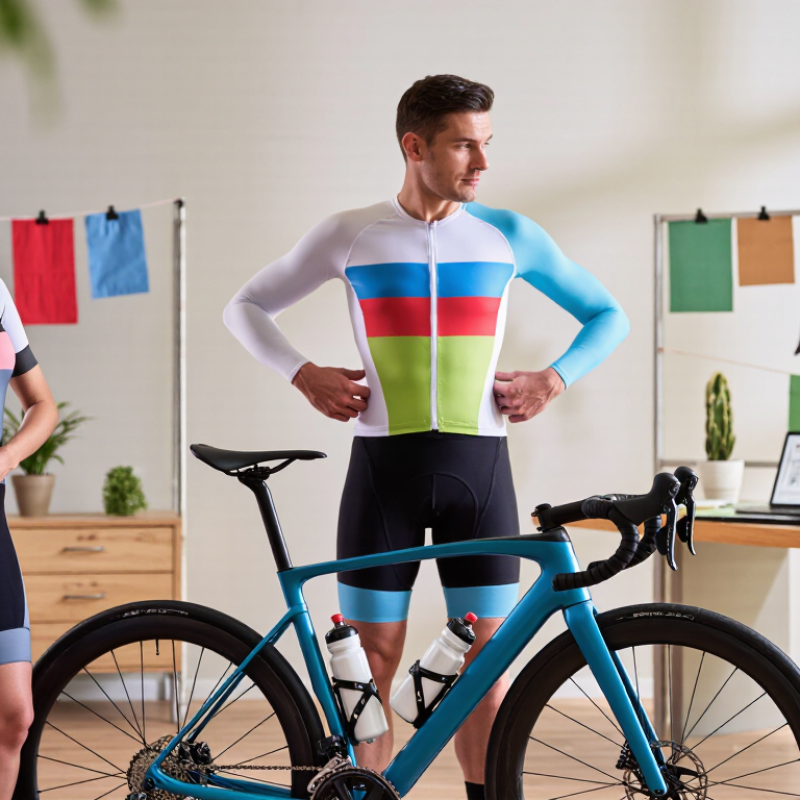
Custom cycling clothing is made for a specific rider, team, or event. It combines visual identity with practical performance. A team’s colors, symbols, and lettering can create unity on the road. However, appearance should not replace comfort. Fit comes first.
The process usually begins with measurements, riding preferences, and fabric choices. A designer then places artwork around seams, pockets, and panels. Good clothing should stay close to the body without restricting breathing or movement.
Sleeves need to remain smooth, while the waistband should hold its position during long rides. Breathable panels can help manage sweat, especially during climbs. Reflective details may also improve visibility in low light. Small details matter.
Tips:
Measure while standing naturally, not while pulling your stomach in. Share your usual riding position with the maker. Test pocket access with gloves and a phone. Ask how the fabric performs after repeated washing. A sample fitting is valuable, but it cannot predict every riding condition.
Experienced riders know that custom clothing is not automatically perfect. A graphic may look balanced on a screen but feel crowded on a curved body. A fabric that feels soft indoors may become heavy when wet. Reviewing the first design carefully can prevent costly adjustments. Leave space for movement. Comfort often reveals weaknesses before appearance does.
Custom cycling clothing begins with a digital body map, not a standard size chart. A rider stands in a controlled position while a 3D scanner records shoulder width, chest depth, waist, hip shape, arm length, and leg angles. Pattern engineers then convert these measurements into panels, seam lines, and stretch zones. Modern digital cycling design often uses more than 20 fit points, including neck height, sleeve circumference, thigh position, and bib-short rise.
The process follows measurement principles described in ISO 8559-1, which supports consistent body sizing. However, a scan is not magic. A rider’s posture, breathing, and preferred position can change the result. A cyclist leaning over handlebars needs different shaping than someone riding upright. Small errors matter. A two-centimetre mismatch can create shoulder tension or fabric folds behind the knee.
Industry data also shows why material choice matters. Textile Exchange’s 2024 Materials Market Report states that polyester represented about 57% of global fiber production in 2023. In cycling clothing, that fiber can provide durable stretch and quick drying, but fiber content alone does not guarantee comfort.
Designers must test recovery, compression, seam placement, and sweat movement. A practical fitting session remains essential. The first digital pattern may look precise, yet real riding can expose pressure points that software misses. That imperfection deserves attention.
Custom cycling clothing combines personal fit, visual design, and fabric performance. Riders can choose panel shapes, sleeve lengths, pocket positions, and construction details for different conditions. A close fit reduces loose fabric and helps the garment stay stable during hard efforts. However, a perfect digital design does not guarantee a perfect ride. Body shape, posture, and fabric stretch can change the final fit.
UPF 50+ is especially valuable during long hours outdoors. It means the fabric allows less than 2% of ultraviolet radiation to pass through. In practical terms, it can block at least 98% of UV radiation reaching covered skin. Dense knitting, darker colors, and carefully selected fibers can support this protection. The fabric still needs to cover the skin consistently. A small gap matters. When a jersey stretches across the shoulders, its protective performance may decrease slightly.
Moisture management also affects real-world comfort. Sweat can make fabric cling, while repeated washing may alter its texture and stretch. I would check the care instructions and avoid assuming that a high UPF rating lasts forever. Exposed areas, such as the neck, hands, and lower legs, need separate protection. Sunscreen can help, but it may wear away with sweat. Custom cycling clothing works best when its pattern, fabric, and riding conditions are considered together.
Custom cycling clothing begins with a digital pattern shaped for riding posture. Designers place colors, logos, names, and measurements on each garment panel. Sublimation printing uses special dye and polyester fabric. The printer first transfers the design onto coated paper. Heat then moves the image into the fabric.
At approximately 190–210°C, the dye changes into a gas. It enters the open structure of polyester fibers and bonds during cooling. The design becomes part of the material, rather than sitting on its surface. There is no thick print layer. That matters during long, sweaty rides. The fabric remains flexible and breathable.
In production checks, a white polyester panel shows the clearest color results. Dark fabrics need a different printing method. Temperature alone does not control quality. Press time, pressure, ink coverage, and fabric composition also matter. A small setting error can create pale colors or blurred edges. A sleeve may look perfect on paper, yet distort after sewing.
Reliable production includes color samples, size checks, and washing tests. I have seen attractive samples lose sharpness after careless heat treatment. That limitation deserves attention. Custom clothing works best when design and manufacturing teams communicate closely. The final fit still depends on accurate body measurements.
Custom cycling clothing means choosing garments made around a rider’s measurements, riding position, and team design. A typical kit may include a jersey, bib shorts, gloves, and cycling socks. The fit should feel secure without restricting breathing or leg movement. Small details matter, especially during long races.
Race compliance can affect sock design. Under UCI rules, socks and overshoes must not extend beyond halfway between the ankle and knee. This limit keeps clothing choices consistent and reduces possible aerodynamic advantages. Officials may check sock height during registration or before a race. Measurements can look simple, but the result may change when fabric stretches over the calf.
A practical fitting method uses the ankle bone and knee area as reference points. Measure while standing naturally, then check the socks when worn with cycling shoes. Do not pull them excessively high. That mistake is common. Custom clothing suppliers should confirm the current event regulations, because local races may apply different requirements. A team can also keep a shorter approved sock option for inspections. The rule sounds minor, yet a few centimeters can create unnecessary stress before the start. My own preference is to test the complete kit in training, including shoes, overshoes, and leg position. A relaxed fit check is more reliable than measuring the socks on a table.
| Data Dimension | Typical Specification or Rule | How It Works in Custom Cycling Clothing | Practical Check |
|---|---|---|---|
| Definition | Cycling apparel designed with rider-selected colors, graphics, text, and fit options. | A digital design is mapped onto garment panels before the fabric is cut and sewn. | Confirm the approved artwork, garment type, size range, and quantity before production. |
| Common Garments | Jerseys, bib shorts, skinsuits, vests, jackets, arm warmers, leg warmers, and socks. | Each item uses a separate pattern, fabric selection, and construction method. | Match the garment to the intended use: racing, training, commuting, or weather protection. |
| Fabric Composition | Performance garments commonly use polyester, polyamide, elastane, or blends of these fibers. | Synthetic fibers provide low moisture absorption, durability, stretch, and faster drying than many natural fibers. | Check fiber content and care instructions on the garment label. |
| Stretch and Fit | Race-fit garments are close to the body; comfort-fit garments allow more room through the torso and arms. | Elastane-containing fabric and shaped panels help the clothing follow the riding position. | Measure the rider while standing and compare chest, waist, hip, inseam, and height with the size chart. |
| Moisture Management | Wicking fabrics move liquid across the fabric surface, where it can spread and evaporate. | Knitted structures and fiber selection influence drying speed, breathability, and comfort. | Use more breathable panels in high-sweat zones and wind-resistant panels for exposed areas. |
| Graphic Application | Dye sublimation is widely used for polyester cycling garments. | Dye is transferred into the polyester fibers using heat, allowing full-panel color and detailed graphics without a heavy surface layer. | Review a digital proof for color, panel alignment, text spelling, and sponsor-free artwork placement. |
| Chamois Pad | Bib shorts may use multi-density foam or synthetic cushioning shaped for cycling posture. | The pad reduces pressure and friction between the rider and saddle; it does not replace correct saddle position or shorts fit. | Choose pad thickness and shape according to ride duration, riding position, and personal comfort. |
| Construction Details | Flatlock or low-profile seams, elastic grippers, zippers, and reinforced stress points are common features. | Construction choices reduce chafing, keep hems in place, and improve durability during repeated movement. | Inspect seams, zipper operation, gripper tension, and stitching consistency before use. |
| Order Workflow | Design selection → measurements → digital proof → approval → production → quality inspection → delivery. | The approved proof becomes the reference for color, artwork placement, sizes, and garment specifications. | Keep a written record of revisions and approve the final proof before production begins. |
| UCI Sock-Height Rule | For events governed by UCI regulations, socks and shoe covers must not extend higher than halfway between the middle of the ankle and the middle of the knee. | Custom sock designs must keep the cuff below the permitted reference point when worn in the race position. | Measure on the rider’s leg while standing: identify the mid-ankle and mid-knee points, then use the midpoint between them as the maximum height. |
| Race Compliance | Applicable rules may cover clothing, equipment, logos, colors, safety, and dimensions. | Custom artwork does not override the technical regulations of the event or governing body. | Check the current event regulations and confirm requirements with race officials before competition. |
| Care and Lifespan | Cool washing, mild detergent, and air drying generally help protect fabric, elasticity, and printed colors. | Heat, fabric softener, abrasive surfaces, and prolonged sunlight can accelerate fading or damage elastic fibers. | Follow the sewn-in care label and close zippers before washing to reduce snagging. |
Note: UCI requirements can change and may be supplemented by event-specific regulations. Always verify the current rules for the particular race.
UPF 50+ allows less than 2% of ultraviolet radiation through the fabric. It can block at least 98% of covered-skin exposure.
No. The neck, hands, and lower legs may remain exposed. A small shoulder gap can matter. Sunscreen still needs reapplying after heavy sweating.
Yes. Stretching across the shoulders may slightly reduce protective performance. Coverage must remain consistent while riding.
A digital pattern follows riding posture and body measurements. Close-fitting panels reduce loose fabric during hard efforts. A perfect screen design is not a perfect fit.
Heat moves dye into polyester fibers. At about 190–210°C, the dye becomes gas and bonds during cooling. The design becomes part of the fabric.
Temperature is only one factor. Pressure, press time, ink coverage, and fabric composition also affect results. A small setting error may create pale colors or blurred edges.
Check measurements, panel alignment, color samples, and washing results. Wear the complete kit during training. Include cycling shoes and riding posture.
Some race regulations limit socks and overshoes to halfway between the ankle and knee. Fabric may rise when stretched over the calf. Measure while standing, then test the socks with shoes.
Repeated washing may alter texture, stretch, and moisture handling. Follow the care instructions. UPF protection should not be assumed to last forever.
Sleeves can distort after sewing, even when the digital design looks correct. Poor heat treatment may reduce sharpness. Attractive samples can still disappoint.
Custom Cycling Clothing combines team identity, personal fit, and practical performance in one purpose-built kit. Instead of relying on standard sizes, designers use digital measurements that may include more than 20 fit points, such as shoulder width, chest, waist, hip, arm, and leg dimensions. These measurements are translated into cycling-specific patterns that support an aerodynamic riding position while allowing freedom of movement and comfort during long or intense rides.
Fabric selection and decoration are equally important. Performance textiles can provide moisture management, stretch, breathability, and UPF 50+ protection, which blocks at least 98% of ultraviolet radiation under suitable testing conditions. With sublimation printing, artwork is transferred into polyester fibers at approximately 190–210°C, helping create durable designs that resist peeling and fading. For organized racing, garments must also respect relevant regulations, including limits on sock height, which may not extend beyond halfway up the leg under UCI rules.