Finding reliable Private Label Lingerie suppliers in 2026 requires more than comparing factory prices. The global lingerie market continues to expand, while shoppers increasingly expect comfort, traceable materials, and responsible production. Grand View Research estimates that the global lingerie market will grow steadily through 2030, supported by online retail and rising demand for premium intimate apparel. That growth creates opportunity, but it also increases supplier risk. Attractive samples can hide weak elastic recovery, inconsistent cup grading, or unclear factory ownership.
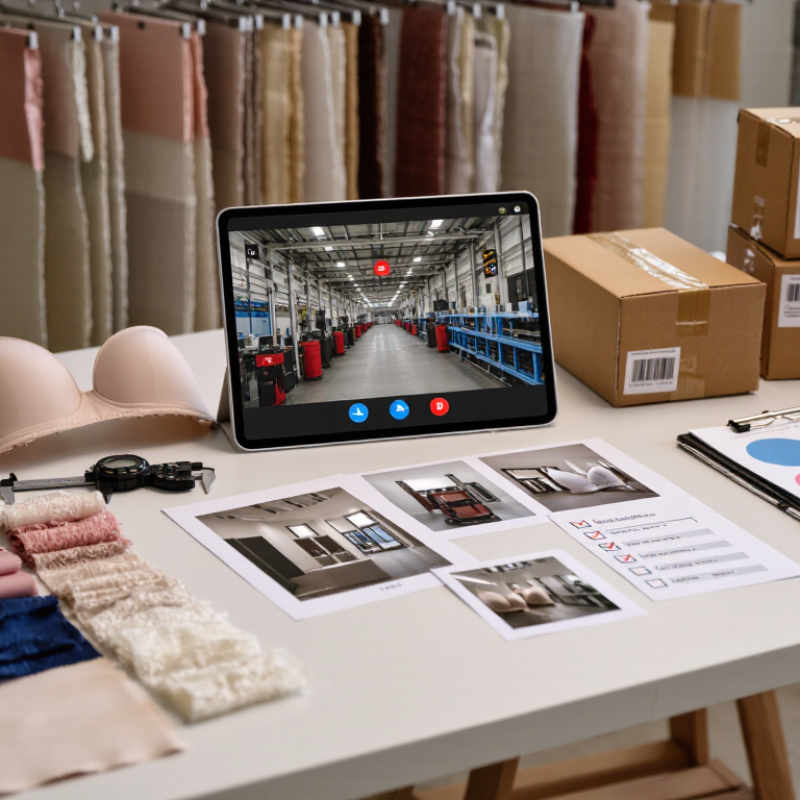
A practical sourcing process should combine product testing, factory verification, and commercial judgment. The Textile Exchange Materials Market Report 2024 highlights continuing pressure to improve fiber traceability and recycled-material claims. Suppliers should therefore provide current certifications, testing records, fiber documentation, and realistic production timelines. Sedex and amfori guidance can support social-compliance screening, although platform membership alone does not prove ethical performance. Ask for a live factory video, recent audit evidence, and a sample made from the intended bulk fabric. Small details matter. Check stitching after washing. Measure the waistband twice. Review packaging and carton labels before approval. Mistakes happen, even with experienced teams. A supplier may pass an audit yet still struggle with shade matching or replenishment speed. This guide explains how to compare Private Label Lingerie manufacturers, assess minimum order quantities, calculate landed costs, and build a supplier shortlist that supports quality, transparency, and dependable growth in 2026.
Defining Your Private Label Lingerie Business Requirements
How to Find Private Label Lingerie Suppliers in 2026?
Defining your business requirements should happen before contacting any supplier. Describe your customer clearly. Consider age, fit preferences, price sensitivity, and buying habits. A satin bralette needs different production skills than seamless shapewear. Write down preferred fabrics, colors, sizes, stitching details, and support levels. Be specific. Vague requests often produce vague samples.
Set practical targets for minimum order quantities, production time, and landed cost. Include packaging, labels, freight, sampling, and possible revision fees. A low unit price may hide expensive development work. During supplier discussions, request fabric compositions, size charts, test reports, and production photos. Confirm how quality checks are handled. Ask whether the supplier can support small pilot orders before larger production. This reduces risk, although it may increase the initial cost.
Your requirements should also cover communication and documentation. Decide how often you need updates and who approves sample changes. Check whether the supplier follows applicable textile labeling, product safety, and workplace requirements in your selling markets. Keep written records of measurements, color references, and approved samples. I have seen projects delayed because one measurement changed in a casual message. That mistake is easy to make. It is also costly. Leave room for honest review. Your first concept may look attractive but feel uncomfortable after several hours of wear. Request fit testing across multiple sizes, not only on one model.
How to Find Private Label Lingerie Suppliers in 2026?
Defining Your Private Label Lingerie Business Requirements
This 100-point supplier evaluation model prioritizes product quality, compliance, production flexibility, total cost, lead time, and communication. Use it as a practical screening framework when comparing private label lingerie suppliers in 2026. Adjust the weights according to your target market, order volume, price position, and sustainability requirements.
Researching and Comparing Potential Lingerie Suppliers
How to Find Private Label Lingerie Suppliers in 2026?
Researching private label lingerie suppliers in 2026 requires more than comparing unit prices. Start with a clear product brief covering fabric composition, stretch recovery, lining, size range, colors, and packaging. Request fabric swatches and a physical sample before discussing larger orders. Inspect seam strength, elastic comfort, stitching density, and wash performance. Small details matter. Ask whether the supplier can repeat the same measurements across production batches.
Build a comparison sheet for minimum order quantities, sample fees, production time, payment terms, and shipping estimates. Include the landed cost, not only the factory quotation. A low unit price may hide expensive revisions or weak quality control.
Ask for recent compliance documents, factory ownership details, testing procedures, and responsible labor policies. Verify documents independently where possible. Trust should be checked.
Communication is another practical test. Send the same technical questions to every supplier and compare the clarity of their replies. Strong suppliers explain limitations instead of promising everything. Request a pre-production sample with approved measurements and color references. Keep written records of changes. I once overlooked packaging tolerances, and the final cartons arrived poorly fitted. That mistake was avoidable. Supplier comparison is not perfectly objective, either. A polished video call cannot replace factory evidence, sample inspection, and consistent follow-up. Evaluate performance over several conversations, not one impressive presentation.
Evaluating Product Quality, Compliance, and Manufacturing Capabilities
How to Find Private Label Lingerie Suppliers in 2026?
Product quality begins with measurable evidence, not attractive samples. Request fabric composition tests, colorfastness results, stretch recovery data, and seam-strength records. Textile Exchange’s Materials Market Report 2024 reported 124 million tonnes of global fiber production in 2023. That scale makes traceable material sourcing increasingly important. Ask suppliers for fiber origin, recycled-content documentation, and a clear lot-control process. During sample reviews, inspect elastic tension, gusset stitching, hook durability, and label accuracy. Small defects become expensive returns.
Compliance requires market-specific verification. Suppliers should identify applicable rules for fiber labeling, chemicals, packaging, and product safety. Request recent third-party laboratory reports, not screenshots without dates or sample references. Factory audits should cover worker safety, wage practices, emergency exits, and subcontracting controls. ISO 9001 certification may support process consistency, but it does not prove lingerie safety. This distinction is often missed. Manufacturing capability also matters: confirm minimum order quantities, size grading, pattern development, mold availability, lead times, and production capacity during peak seasons.
Tips: Send one approved reference sample. Require written tolerance limits. Test a pre-production batch. Check whether the factory can repeat the same fit after washing. A supplier may show excellent craftsmanship on ten pieces, then struggle with 10,000. That risk deserves a second review. The OECD Due Diligence Guidance recommends documented, risk-based supplier monitoring; apply that approach to every production partner.
Negotiating Pricing, Minimum Orders, and Private Label Services
Finding private-label lingerie suppliers in 2026 requires more than a polished catalog. Grand View Research’s 2024 report projects lingerie-market growth of about 5.5% annually through 2030. IMARC’s 2025 report gives a different market baseline but similar mid-single-digit growth. Definitions vary, so treat forecasts as direction, not proof. Ask each factory for a dated quotation, material composition, test records, production photos, and references. A sample should match the tech pack, elastic recovery, stitching, gusset construction, and wash behavior. Small details matter.
Negotiate the landed cost, not only the unit price. Request separate lines for fabric, labor, trims, packaging, sampling, inspection, and freight. A lower quote may hide thinner elastics or expensive revisions. Ask for MOQ by style, color, and size run. A supplier quoting 500 pieces may require 500 per color. Clarify whether custom labels, hangtags, folding, barcodes, and care information are included. Agree on approval gates, defect tolerance, lead time, payment milestones, and remedies before paying a deposit. I leave a modest negotiation buffer for new suppliers. It feels inefficient, but it protects cash flow. Not every private-label service includes pattern development or grading. Confirm ownership and file formats in writing. Use a small pilot order first. It may delay launch, yet it exposes communication gaps cheaply. Good suppliers explain capacity honestly. Those answers beat glossy promises.
Managing Samples, Production, Inspection, and Reordering
Finding a private label lingerie supplier in 2026 requires more than comparing prices. Request samples before discussing large production runs. Check fabric recovery, stitching, elastic tension, lining, and size consistency. Ask for the exact material composition and washing instructions. A sample may look attractive but feel uncomfortable after one hour. Test it longer.
Tips: Keep a sample record with photos, measurements, fabric details, and correction notes. Send one marked sample to the supplier. Use clear comments, not general feedback. Small details matter. Cup shape and strap placement can change the whole fit.
During production, approve a final pre-production sample and confirm every specification in writing. Ask for progress photos, but do not treat photos as a full inspection. An independent inspector can check measurements, color, packaging, labels, and visible defects before shipment. I have seen minor measurement changes create serious customer complaints. My process is not perfect either; sometimes a rushed approval causes avoidable rework. Build extra time into the schedule. After delivery, compare random pieces with the approved sample. Record defect rates and customer feedback before reordering. Repeat only when quality remains stable across several batches. Reordering should use the same specification sheet, but review it carefully when fabric or trims change. Supplier communication improves when evidence is specific and consistent.
FAQS
Request a dated quotation, material composition, test records, production photos, and customer references. Ask for a physical sample. Glossy catalogs are not enough.
Compare landed cost, not only the unit price. Request separate costs for fabric, labor, trims, packaging, sampling, inspection, and freight. A cheap quote may hide weaker elastics or costly revisions.
Ask for MOQ by style, color, and size range. A 500-piece MOQ may mean 500 pieces per color. Confirm this detail in writing.
Check fabric recovery, stitching, elastic tension, lining, gusset construction, and size consistency. Wear the sample for at least one hour. Comfort can change over time.
Keep photos, measurements, fabric details, and correction notes. Send one marked sample to the supplier. Use specific comments about cup shape or strap placement.
Confirm whether pattern development, grading, custom labels, hangtags, folding, barcodes, and care information are included. Confirm file ownership and formats. Assumptions create delays.
Approve a final pre-production sample and every specification in writing. Request progress photos, but do not treat them as a complete inspection. Photos miss hidden problems.
An independent inspector can check measurements, colors, packaging, labels, and visible defects. Compare random delivered pieces with the approved sample. Small measurement changes can trigger serious complaints.
Record defect rates and customer feedback after delivery. Reorder only after quality stays stable across several batches. I sometimes approve too quickly. Extra schedule time helps.
Conclusion
Finding the right Private Label Lingerie supplier in 2026 begins with clearly defining your business requirements, including target customers, product styles, materials, size ranges, packaging, quality standards, and expected order volumes. Once these priorities are established, research and compare potential suppliers based on their communication, experience, production capacity, customization options, and ability to support your desired product direction. Request detailed information, review samples, and confirm that their manufacturing processes meet appropriate safety, labeling, and compliance expectations.
Before placing an order, evaluate product quality, consistency, lead times, and inspection procedures. Negotiate pricing, minimum order quantities, payment terms, packaging, and available private label services to create a practical and sustainable partnership. A well-managed process should include sample approval, clear production specifications, progress updates, pre-shipment inspection, and a reliable reordering plan. By combining careful research with structured supplier management, businesses can build a dependable lingerie collection while controlling costs, maintaining quality, and preparing for long-term growth.