



Wholesale Clothing Blog — Alanic Global
Apparel Industry Trends & Insights
Sustainable Fashion Insights
Insights & Guides

Apparel & Manufacturing Blog

Discover expert articles, industry trends, and strategic advice for wholesale buyers, private label brands, and fashion retailers.

0%

Sourcing Wholesale Flannel Shirts globally is not simply a search for the lowest factory quote. It is a practical investigation into fabric quality, production reliability, ethical standards, and delivery control. As textile manufacturing specialist Debbie McKeegan says, “Good sourcing begins with asking better questions, not chasing the lowest price.” That principle matters when comparing suppliers across China, India, Pakistan, Bangladesh, Turkey, and other production regions.

A dependable sourcing process starts with a clear product brief. Define the fabric weight, fiber blend, brushed finish, yarn count, plaid pattern, sizing range, and target quantity. Request physical samples before discussing large orders. Touch the fabric. Check shrinkage after washing. Inspect seam strength, button attachment, colorfastness, and pilling. Small details become expensive problems later.

Supplier verification needs patience. Review factory experience, export history, production capacity, audit records, and communication speed. Ask for recent product photos, test reports, and references from comparable buyers. Certifications can support responsible decisions, but paperwork alone is not proof. Visit the facility when possible, or use an independent inspection service.

Pricing can look attractive at first. It may change after packaging, labeling, freight, duties, and sampling costs appear. Compare total landed cost, not only unit price. Confirm minimum order quantities, payment terms, lead times, Incoterms, and defect policies in writing. No scorecard is perfect. I have learned that an impressive catalog can hide weak quality control. Careful questioning, documented samples, and realistic timelines make Wholesale Flannel Shirts sourcing more reliable. There is still uncertainty. Good buyers manage it rather than pretending it does not exist.
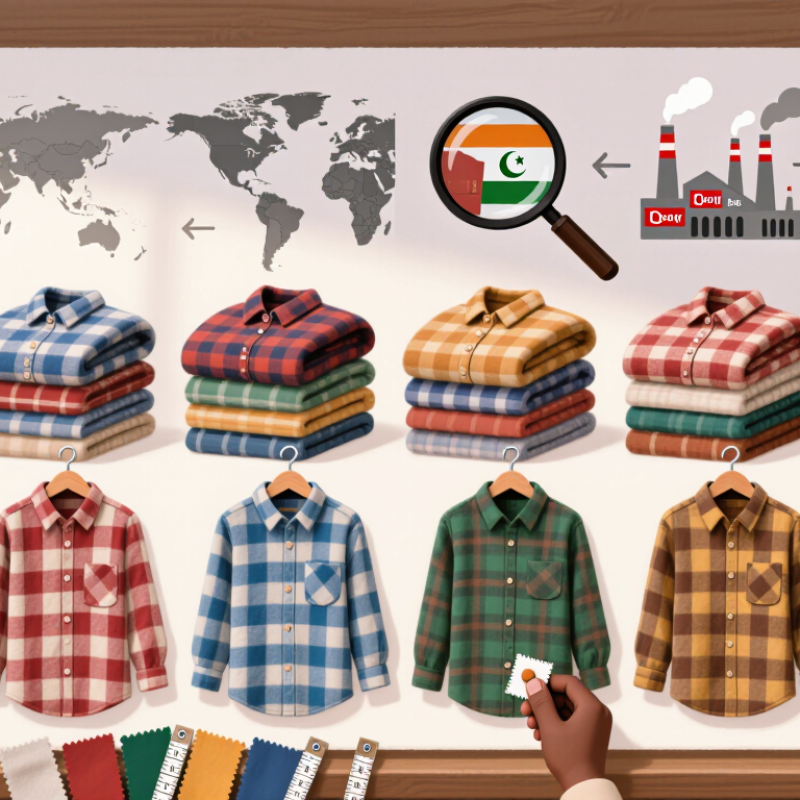
How to Source Wholesale Flannel Shirts Globally?

Define Product Requirements and Wholesale Flannel Shirt Specifications

Before contacting overseas factories, define the flannel shirt precisely. State the fiber blend, yarn count, weave, fabric weight, color, finish, and intended season. A practical starting range is 180–260 GSM for everyday shirts, while heavier winter styles may exceed 300 GSM. The 2024 Textile Exchange Materials Market Report estimates global fiber production reached 124 million tonnes in 2023. Cotton represented about 22% of that volume, making fiber traceability commercially important.

Specify measurable tolerances, not vague terms like “soft” or “premium.” Request fabric composition testing, GSM verification, shrinkage results, pilling resistance, and colorfastness data. ISO 105 testing can support colorfastness requirements, while ASTM D3776 provides a recognized method for fabric weight measurement. Define acceptable tolerances clearly, such as ±5% for GSM and ±3% for finished measurements. Check sleeve length, collar spread, button spacing, seam density, and brushed-surface consistency across production samples.

Small details matter.

A buyer should also state packaging, labeling, carton limits, inspection stages, and minimum order quantities. The 2024 Global Fashion Agenda Pulse of the Fashion Industry research continues to emphasize measurable supply-chain transparency and material impacts. However, recycled content claims require documented evidence, not supplier wording alone. One weakness in many sourcing briefs is inconsistent color naming between teams. Use physical swatches, digital references, and approved lab dips together. Even then, monitor shade variation after washing. Specifications reduce disputes, but they cannot replace careful sample review.

Identify and Compare Global Wholesale Sourcing Markets

Sourcing wholesale flannel shirts globally requires comparing markets, not chasing the lowest unit price. Flannel belongs to the wider woven-shirt trade, so HS-code data requires careful reading. The International Trade Centre’s Trade Map, based on UN Comtrade records, compares export value, volume, and average unit value by country. These figures show market position, not factory capability. That distinction matters.

China offers broad fabric and trim ecosystems, supporting flexible development and mixed orders. Bangladesh can suit larger, repeat programs with disciplined production planning. Vietnam often combines strong cut-and-sew capacity with improving logistics. India and Türkiye deserve attention for fabric variety, regional replenishment, and smaller development runs. The World Bank’s 2023 Logistics Performance Index shows meaningful differences in customs, infrastructure, and shipment reliability. Check port performance too. National rankings can hide factory-level delays.

For each market, request fabric weight, brushed finish, shrinkage results, colorfastness, carton dimensions, minimum order quantity, and production calendars. Compare landed cost, including testing, inland freight, duty, and buffer inventory. Textile Exchange’s Materials Market Report 2024 highlights growing demand for traceable, lower-impact fibers. Verify fiber origin and recycled content carefully. Audit evidence should include recent test reports and worker-safety records. Quotations are imperfect. A cheap shirt may become expensive after rework, late delivery, or uneven inspection. I would sample two factories per market, wash-test the shirts, and record every variance before negotiating. The spreadsheet is never the whole truth.

Evaluate Suppliers, Factories, and Product Quality

How to Source Wholesale Flannel Shirts Globally?

A reliable supplier should provide more than attractive photos and low quotations. Request business registration details, factory addresses, production capacity, and recent inspection records. Ask who owns the fabric, cutting, sewing, and finishing processes. Some suppliers outsource quietly, which can affect consistency. Video calls help, but an independent factory audit gives stronger evidence. Check whether the supplier understands your target market’s labeling, packaging, and safety requirements.

Evaluate fabric quality through physical samples, not promises. Check fiber content, fabric weight, softness, colorfastness, shrinkage, and seam strength. Wash the sample several times. Measure it before and after. Flannel that feels excellent on day one may pill or lose shape later. Compare samples from different production batches when possible. I once underestimated shrinkage after washing, and the final measurements changed more than expected. That mistake made written testing standards essential.

Tips: Use a simple supplier scorecard. Record sample results, response speed, audit findings, minimum order quantities, and payment terms. Ask for a pre-production sample before bulk manufacturing. Keep approved measurements and fabric references in writing. Do not choose the cheapest offer automatically. A low price can hide thinner fabric, rushed stitching, or unstable dye lots. Request corrective actions when defects appear, and review them with dated photos. Clear records make quality disputes easier to handle.

How to Source Wholesale Flannel Shirts Globally? — Logistics Readiness by Sourcing Market

The chart uses the World Bank’s 2023 Logistics Performance Index (LPI), scored from 1 to 5, as an objective first-stage indicator for evaluating wholesale flannel-shirt sourcing markets. Higher scores generally indicate stronger customs, infrastructure, shipment reliability, logistics competence, and delivery-tracking performance. Logistics performance does not replace factory audits, fabric testing, colorfastness checks, shrinkage testing, or pre-shipment inspections.

Source: World Bank, Logistics Performance Index 2023 — https://lpi.worldbank.org/

Manage Pricing, Minimum Orders, and International Trade Terms

Global sourcing flannel shirts starts with landed cost, not factory price. I compare fabric weight, brushing, shrinkage, sewing, inspection, and packing. A 220-gram cotton flannel may quote attractively, yet heavy brushing can raise labor and energy costs. The WTO World Trade Statistical Review 2024 reported merchandise trade value fell 5% in 2023, reaching about $24.01 trillion. That decline matters. Mills may protect cash flow through smaller discounts or stricter payment terms. Request three quotations with identical specifications. Otherwise, comparison becomes guesswork.

Minimum order quantities need practical testing. Ask for MOQ per color, size ratio, and total style. A supplier may accept 300 shirts overall but require 100 pieces per color. That changes inventory risk quickly. ITC Trade Map and UN Comtrade data for HS 620520 help compare exporting countries, shipment values, and supplier concentration. The code is not perfect for every flannel design. Check classification with a customs professional. For a trial order, negotiate a higher unit price with a lower MOQ. It can reveal defects before a large commitment.

Choose Incoterms based on control, not habit. Under ICC Incoterms 2020, FOB transfers risk after loading at the named port, while DDP places wider delivery obligations on the seller. Confirm freight, insurance, duties, import clearance, and destination charges in writing. A landed-cost sheet should show currency, payment timing, carton dimensions, and demurrage assumptions. Use a 30/70 payment structure only after checking production evidence and inspection rights. Trade finance can be fragile. I have seen “cheap” offers lose their advantage after port delays, rework, and currency movement. Leave a contingency, even when the spreadsheet looks clean.

How to Source Wholesale Flannel Shirts Globally? — Manage Pricing, Minimum Orders, and International Trade Terms
Sourcing Region Typical Product Positioning Indicative FOB Price
(USD / piece)
Typical MOQ
(pieces / style / color)
Estimated Production Lead Time Common Trade Terms Payment Practice Freight and Logistics Considerations Key Commercial Advantages Main Risks to Control
South Asia Basic to mid-market cotton flannel shirts; woven cotton and brushed cotton options are widely available. $4.20–$8.50 300–1,000 45–75 days after approval of samples and materials FOB, FCA, CFR, CIF Commonly 30% deposit and 70% balance before shipment or against shipping documents Ocean freight is generally economical; allow additional time for port congestion and inland transportation. Competitive labor costs, strong cotton-garment capacity, and flexible fabric and wash options. Longer sampling cycles, variable quality consistency, and possible delays during peak export seasons.
East Asia Broad range from value products to engineered, heavyweight, brushed, garment-dyed, or recycled-fiber flannel shirts. $5.00–$11.50 300–1,200 35–65 days after final specification confirmation EXW, FOB, FCA, CFR, CIF Usually 20%–30% deposit with the remainder due before shipment; larger programs may negotiate payment terms. Frequent sailing schedules and developed supplier networks; calculate customs duty, brokerage, and destination charges separately. Strong manufacturing infrastructure, reliable accessory sourcing, and good capacity for technical product development. Higher labor and compliance costs than lower-cost sourcing regions; capacity may tighten before major retail seasons.
Southeast Asia Mid-market cotton, cotton-blend, and casualwear flannel shirts with growing export capability. $4.80–$10.00 500–1,500 45–75 days after lab-dip, size-set, and pre-production approvals FOB, FCA, CFR, CIF, DAP by negotiation 30% deposit and 70% balance is common for first orders; credit terms depend on supplier history. Transit times vary by port and destination; compare direct services with transshipment routes. Good balance of cost, quality, and product diversification; suitable for multi-season sourcing programs. Supplier capacity and fabric availability can vary significantly between factories.
Eastern Europe and Türkiye Fast-turnaround mid-market and premium flannel shirts, often serving nearby regional markets. $7.50–$15.00 150–600 25–50 days after approved materials and specifications EXW, FCA, CPT, DAP, CIF Deposit requirements vary; shorter supply chains may support staged payments for established buyers. Shorter road or multimodal transit to Europe; air freight is practical for urgent replenishment but costly. Lower minimum orders, shorter lead times, and easier in-person quality control for nearby buyers. Higher unit costs and limited capacity for very large seasonal programs.
Latin America Regional-market casual shirts, cotton flannel basics, and nearshore replenishment programs. $6.50–$13.00 250–1,000 30–60 days after approval of fit, fabric, and packaging EXW, FCA, FOB, DAP Deposit plus balance before dispatch is common; payment conditions vary by country and buyer relationship. Nearshore trucking and shorter ocean routes may reduce replenishment time for regional customers. Useful for regional supply chains, smaller replenishment runs, and reduced long-distance inventory exposure. Higher costs for certain fabrics and trims; export documentation and route availability require checking.
North Africa and the Mediterranean Nearshore cotton and cotton-blend flannel shirts for European and regional distribution. $6.80–$13.50 250–800 30–60 days after confirmation of materials and production schedule EXW, FCA, CPT, DAP, CIF 30% deposit with balance before shipment is frequently used for new accounts. Road, short-sea, and multimodal options can provide relatively short delivery windows to nearby markets. Nearshore location, moderate order flexibility, and shorter transit to selected European destinations. Factory capability differs widely; verify testing, finishing quality, and documentation before placing bulk orders.
Data basis and purchasing note: Price ranges are indicative FOB estimates for standard adult flannel shirts made with approximately 170–250 gsm brushed cotton or cotton-blend fabric, excluding duties, taxes, tooling, testing, special packaging, embroidery, and freight after the named place. Actual quotations depend on fabric composition, GSM, construction, order volume, color count, sizing ratio, trims, finishing, inspection requirements, and destination. Confirm the applicable HS classification, customs duty, import taxes, product-safety rules, labeling requirements, and Incoterms® 2020 responsibilities before issuing a purchase order.

Arrange Sampling, Production, Shipping, and Supplier Follow-Up

How to Source Wholesale Flannel Shirts Globally?

A reliable flannel program starts with a controlled sample, not a supplier promise. Textile Exchange’s 2024 Materials Market Report records 124 million tonnes of global fiber production in 2023. That scale makes material verification essential. Request fabric composition, GSM, yarn count, shrinkage, and colorfastness results. Measure the sample after washing. Small checks prevent expensive surprises.

Production needs written checkpoints. Approve a pre-production sample before cutting begins. Confirm plaid alignment, pocket placement, button strength, stitching density, and carton measurements. Use an independent inspection before final payment. My sourcing reviews often reveal a weakness: approved samples can still hide rushed factory changes. Record every adjustment with dated photographs and signed specifications. Keep communication boring and precise.

Shipping planning should match production reality. UNCTAD’s Review of Maritime Transport 2024 states that over 80% of global merchandise trade moves by sea. Compare sea, rail, and air options against delivery urgency and order value. Confirm Incoterms, export documents, insurance, carton labels, and destination duties with qualified logistics professionals. The World Bank’s 2023 Logistics Performance Index assesses customs, infrastructure, shipment tracking, and timeliness. Check those factors when comparing sourcing countries. Follow up weekly, but ask for evidence, not reassurance. A late fabric delivery can quietly damage the entire schedule.

FAQS

What specifications should buyers define before sourcing wholesale flannel shirts?

Define fiber blend, yarn count, weave, fabric weight, color, finish, and season. Use measurable details, not vague claims like “premium.” Every detail matters.

What fabric weight suits everyday and winter flannel shirts?

Everyday shirts often use 180–260 GSM fabric. Heavier winter styles may exceed 300 GSM. Confirm GSM through testing, not appearance alone.

Which quality checks should buyers request from suppliers?

Request fiber composition, GSM, shrinkage, pilling, seam strength, and colorfastness results. Use clear tolerances, such as ±5% for GSM and ±3% for finished measurements. The numbers can still disappoint.

How can buyers evaluate flannel fabric samples properly?

Measure the sample before washing and after several washes. Check softness, pilling, shape retention, color change, and sleeve length. A shirt may feel excellent on day one, then lose its shape.

What supplier information should buyers verify?

Request registration details, factory addresses, production capacity, and recent inspection records. Ask who handles fabric, cutting, sewing, and finishing. Quiet outsourcing can weaken consistency.

Should buyers approve a pre-production sample?

Yes. Approve one before bulk cutting begins. Check plaid alignment, pocket placement, button strength, stitching density, and measurements. Keep signed specifications and dated photographs.

How can buyers reduce disputes about color and packaging?

Use physical swatches, digital references, and approved lab dips together. Define labels, carton limits, packaging, and carton measurements in writing. Washing may still create shade variation.

How should buyers manage shipping and supplier follow-up?

Compare sea, rail, and air transport against urgency and order value. Confirm trade terms, export documents, insurance, carton labels, and destination duties. Follow up weekly. Ask for evidence, not reassurance.

Conclusion

Sourcing Wholesale Flannel Shirts globally requires a clear plan from product definition to final delivery. Start by specifying fabric composition, weight, softness, weave, colors, patterns, sizes, fit, trims, labeling, packaging, and performance requirements. Then compare sourcing markets according to manufacturing expertise, material availability, production capacity, communication efficiency, lead times, and total landed cost. A structured supplier review should include factory experience, quality-control procedures, certifications, production samples, customer references, and the ability to meet consistent standards.

After selecting potential suppliers, negotiate pricing, minimum order quantities, payment arrangements, production schedules, and suitable international trade terms. Request samples before placing a bulk order and evaluate shrinkage, colorfastness, stitching, measurements, comfort, and overall workmanship. During production, confirm approved specifications, monitor quality at key stages, and maintain accurate documentation. Finally, coordinate shipping, customs paperwork, inspections, delivery timelines, and post-order follow-up to resolve issues and build a reliable, long-term sourcing relationship.

Ethan

Ethan

Ethan is a dedicated marketing professional with a profound expertise in the company's products and services. With years of experience in the industry, he possesses a deep understanding of market trends and customer needs, allowing him to create compelling content that showcases the company’s core......