Discover expert articles, industry trends, and strategic advice for wholesale buyers, private label brands, and fashion retailers.
The global demand for performance clothing is reshaping how buyers evaluate Wholesale Gym Leggings suppliers. Grand View Research valued the global sports apparel market at approximately USD 203 billion in 2023. Its report also forecasts steady growth through 2030. McKinsey’s Sporting Goods reports identify wellness, casualization, and digital commerce as continuing forces behind this expansion. These trends create opportunity, but they also increase sourcing pressure. Buyers now inspect fabric recovery, opacity, stitching, size consistency, and production capacity. A glossy product photo is not enough.
Matt Powell, a longtime sports-industry analyst, has described athleisure as “a secular trend, not a passing fashion.” His observation remains useful for wholesale decisions. Leggings are no longer limited to studio workouts. They appear in commuting wardrobes, travel bags, and everyday retail displays. This wider use demands better product testing and clearer supplier communication. A serious supplier should provide fiber content, weight, stretch performance, colorfastness, and inspection records. Certifications can help, but they still require verification.
No supplier list is perfect. Factory performance may change with order size, season, or material availability. Therefore, this guide evaluates ten Wholesale Gym Leggings suppliers through practical buying criteria. These include minimum order quantities, private-label support, sample quality, lead times, customization, and export experience. Prices matter. So do defect rates and response speed. Buyers should request current samples before committing to a large order. Small details often expose large risks.
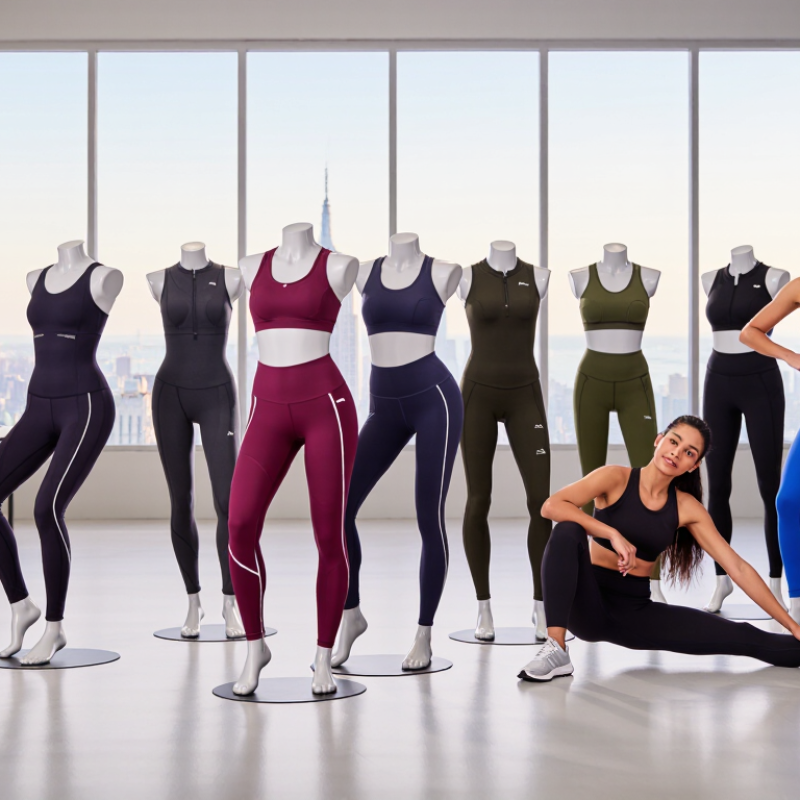
The wholesale gym leggings market is moving toward flexible, durable, and responsibly produced activewear. Global buyers now compare more than unit price. They examine fabric recovery, opacity, stitching, sizing, and delivery reliability. A pair may look attractive in photos yet become transparent during squats. That mistake is expensive. Common orders include high-waist leggings, seamless styles, compression fits, and everyday training designs. Demand varies by region, climate, sport, and customer body shape. Lightweight, sweat-wicking fabric suits warm markets. Brushed, thicker fabric may perform better in cooler areas.
Professional buyers usually request fabric composition, GSM, stretch tests, colorfastness results, and measurement charts. They also need clear minimum order quantities, sample timelines, packaging details, and production capacity. A practical sample review should include squats, lunges, washing, and several hours of movement. Check waistband roll, pocket strength, seam irritation, and odor after drying. Small details matter. Compliance documents should be current and traceable. Claims about recycled fibers or ethical production need supporting records, not attractive wording.
Reliable suppliers communicate problems early. No supplier is perfect. They explain acceptable tolerances instead of promising perfection. Buyers should compare pre-production samples with bulk units and record every change. Color can shift between dye lots, which is often overlooked. Forecast accuracy also deserves attention. Over-ordering ties up cash, while under-ordering loses seasonal sales. A balanced contract should define inspection standards, defect handling, lead times, and payment milestones. Price still matters, but it should be judged beside performance, consistency, and total landed cost.
| Rank | Supplier Profile | Typical Sourcing Region | Best Buyer Fit | Indicative Wholesale Price (USD / piece) |
Typical MOQ (pieces / style) |
Sample Lead Time | Bulk Production Lead Time | Common Fabric Composition | Key Product Capabilities | Common Compliance Options | Buyer Requirements to Confirm |
|---|---|---|---|---|---|---|---|---|---|---|---|
| 1 | Large-Scale OEM Performancewear Supplier | East and South China | Established retailers, distributors and private-label brands | $7.00–$15.00 | 300–1,000 | 7–14 days | 30–60 days | 75–80% nylon or recycled nylon / 20–25% elastane | High-waist construction, seamless options, squat-proof fabrics, compression panels and custom prints | OEKO-TEX® Standard 100, recycled-content documentation, social-audit support | Colorfastness, stretch recovery, pilling resistance, size grading, packaging and inspection standards |
| 2 | Sustainable Recycled-Fabric Supplier | Vietnam | Eco-conscious brands and buyers targeting premium markets | $9.00–$18.00 | 500–1,500 | 10–18 days | 45–70 days | Recycled polyamide or recycled polyester / 20–25% elastane | Matte finishes, moisture management, low-impact dyeing and recycled yarn traceability | Global Recycled Standard, OEKO-TEX® Standard 100, amfori BSCI or equivalent audits | Valid transaction certificates, recycled-content percentage, chemical restrictions and audit validity |
| 3 | Small-Batch Private-Label Supplier | South China | Startups, online sellers and buyers testing new collections | $10.00–$22.00 | 50–300 | 7–15 days | 25–45 days | Polyester / elastane or nylon / elastane blends | Stock-body customization, logo heat transfer, simple labels and limited color selections | Material test reports and basic factory quality-control documentation | Artwork format, logo placement, sample approval, minimum color quantity and defect tolerance |
| 4 | Premium European-Finish Supplier | Turkey | European buyers requiring shorter regional replenishment cycles | $11.00–$24.00 | 300–800 | 10–20 days | 35–60 days | Polyamide / elastane, polyester / elastane and brushed performance knits | Clean finishing, bonded seams, sculpting panels, flatlock stitching and premium trims | OEKO-TEX® Standard 100, ISO 9001 quality systems and social-compliance audits | Incoterms, customs documentation, European labeling, seam strength and delivery schedule |
| 5 | Cost-Competitive High-Volume Supplier | Bangladesh | Mass-market retailers and promotional activewear programs | $5.50–$12.00 | 1,000–3,000 | 14–21 days | 45–75 days | Polyester / elastane and nylon / elastane blends | Standard high-waist leggings, basic compression, flat seams and large-volume cutting | WRAP, SEDEX, amfori BSCI, OEKO-TEX® testing and buyer-specific inspections | Factory capacity, worker-safety records, fabric shrinkage, carton packing and third-party inspection |
| 6 | Fashion-Forward Gymwear Supplier | Guangdong and Zhejiang, China | Trend-led e-commerce sellers and seasonal collections | $6.50–$16.00 | 100–500 | 7–14 days | 30–55 days | Nylon / elastane, polyester / elastane and textured knit fabrics | Contour seams, ribbed textures, scrunch details, color blocking and seasonal designs | OEKO-TEX® testing, restricted-substance testing and standard social audits | Design ownership, sample revisions, color approval, transparency performance and logo durability |
| 7 | Technical Compressionwear Supplier | Portugal and Southern Europe | Performance-focused buyers and specialist fitness retailers | $14.00–$30.00 | 200–600 | 14–21 days | 45–80 days | High-density polyamide / elastane or recycled polyamide / elastane | Graduated compression, moisture control, ergonomic panels, bonded hems and technical testing | OEKO-TEX®, ISO-based quality systems, recycled-content certification and European social audits | Compression level, performance test method, wash-care instructions, labeling and technical specifications |
| 8 | Flexible Customization Supplier | India | Buyers needing custom colors, prints and moderate order volumes | $7.50–$17.00 | 200–800 | 10–18 days | 35–65 days | Polyester / elastane, nylon / elastane and recycled polyester blends | Digital printing, sublimation, embroidery, custom waistbands and broad size ranges | OEKO-TEX® testing, ISO 9001 systems, social audits and buyer-required laboratory reports | Print color consistency, dye migration, fabric GSM, shrinkage and size tolerance |
| 9 | Mid-Market OEM and Replenishment Supplier | Pakistan | Independent retailers, gym chains and recurring wholesale programs | $6.00–$14.00 | 300–1,000 | 10–17 days | 35–60 days | Polyester / elastane and nylon / elastane performance jersey | Core styles, repeat-order support, screen printing, heat transfers and standard packaging | Social-compliance audits, OEKO-TEX® test reports and pre-shipment inspection support | Repeat-order price protection, fabric lot consistency, delivery reliability and carton specifications |
| 10 | Nearshore Americas Supplier | Mexico and Central America | North American buyers prioritizing shorter transit and rapid replenishment | $10.00–$22.00 | 300–1,200 | 10–20 days | 30–60 days | Polyester / elastane, nylon / elastane and recycled synthetic blends | Quick-turn basics, private labeling, regional shipping and replenishment-focused production | WRAP or equivalent audits, OEKO-TEX® testing, buyer compliance programs and origin documentation | Rules of origin, customs classification, delivery terms, domestic labeling and freight responsibility |
| Core buyer requirements: opaque fabric under stretch, reliable size grading, four-way stretch, moisture management, strong waistband recovery, colorfastness, pilling resistance, secure stitching, documented restricted-substance compliance, accurate carton labeling and pre-shipment quality inspection. | |||||||||||
Request recent audit records, monthly capacity, minimum order quantities, and realistic lead times. Clear answers matter. Compare documents with samples, not photos alone.
Lightweight, sweat-wicking fabrics fit warm climates and active training. Thicker brushed fabrics may perform better in colder regions. Check fiber composition and fabric weight before ordering.
Perform deep squats and lunges under bright lighting. Check the fabric from several angles. Opaque in photos is not always opaque in motion.
Stretch the leggings repeatedly and inspect recovery afterward. Wash them, dry them, and check pilling, odor, seams, and waistband rolling. Small defects become costly later.
Ask for composition details, laboratory results, measurement charts, and colorfastness records. Sustainability claims need traceable supporting documents. Certification alone is not enough.
Review size grading across target markets and body shapes. Check petite, standard, and extended-size measurements when needed. A correct sample can still fit poorly in bulk production.
Define inspection standards, defect allowances, replacement procedures, lead times, and payment milestones. Include packaging and shipping terms. Vague promises create avoidable arguments.
Compare unit price with performance, consistency, shipping, duties, and inspection expenses. Over-ordering traps cash in storage. Under-ordering may lose seasonal sales. A perfect forecast is unlikely.
Record response times during sampling and ask how problems are handled. Honest delays are safer than false promises. No supplier is perfect. I would still reassess capacity before every major order.
This guide explores the Wholesale Gym Leggings market and the key requirements of international buyers, including fabric quality, fit consistency, size range, durability, moisture management, customization options, and reliable production capacity. It explains how to evaluate suppliers through product samples, manufacturing experience, communication efficiency, minimum order quantities, lead times, quality control, certifications, and export support. These criteria help buyers identify suppliers that can meet both customer expectations and long-term business goals.
The article also presents profiles of ten leading wholesale suppliers without focusing on any specific brand, comparing their product selections, pricing structures, certifications, customization services, packaging options, and ordering flexibility. Finally, it provides practical steps for selecting the right partner, requesting samples, confirming specifications, negotiating terms, reviewing compliance documents, placing an initial order, and monitoring delivery performance. By following this process, global buyers can reduce purchasing risks and build a dependable supply chain for high-quality Wholesale Gym Leggings.